The platform
Caregivers come back because it makes the week easier.
Caregiver engagement only works when you are making a meaningful difference in the lives of caregivers and the people they care for. We earn daily use by taking real work off caregivers' plates, which allows us to help both caregivers and health plans get important things done.
Two jobs
The platform has two jobs.
Every feature in it belongs to one of them.
We save caregivers time
Up close, caregiving is a constantly shifting landscape of tasks, logistics, and decisions. Scheduling a visit, picking up a prescription, keeping the right groceries in the house. Each one seems small, and together they consume hours every week. We make those tasks easier, more organized, and less time-consuming.
We support caregiver wellbeing
Very few people become caregivers on purpose, and almost nobody plans for it. More often there is a health crisis and someone has to step up with very little idea of what will be asked of them. We teach caregivers the things they don't yet know they need to know. We help them stay ahead of burnout before it reaches a breaking point.
The toolkit
The everyday things that keep a family coordinated.
Most of what a caregiver does in a week is logistics. These are the tools that absorb it, and they are the reason the app is open at all.
-
Calendar
One shared calendar for dates, reminders, appointments and medications, visible to everyone helping.
-
Care notes
What the doctor actually said, what changed this week, and the observations worth keeping.
-
Tasks
Assign work across the care hub so the load is shared and nothing depends on one person remembering.
-
Messages
Care conversations in one thread instead of scattered across text, email and voicemail.
-
Files & contacts
Insurance cards, directives and the provider phone numbers currently living on a sticky note.
-
Health monitoring
Vitals tracked over time, syncing from Apple Health, Fitbit and connected devices, so trends surface early.
-
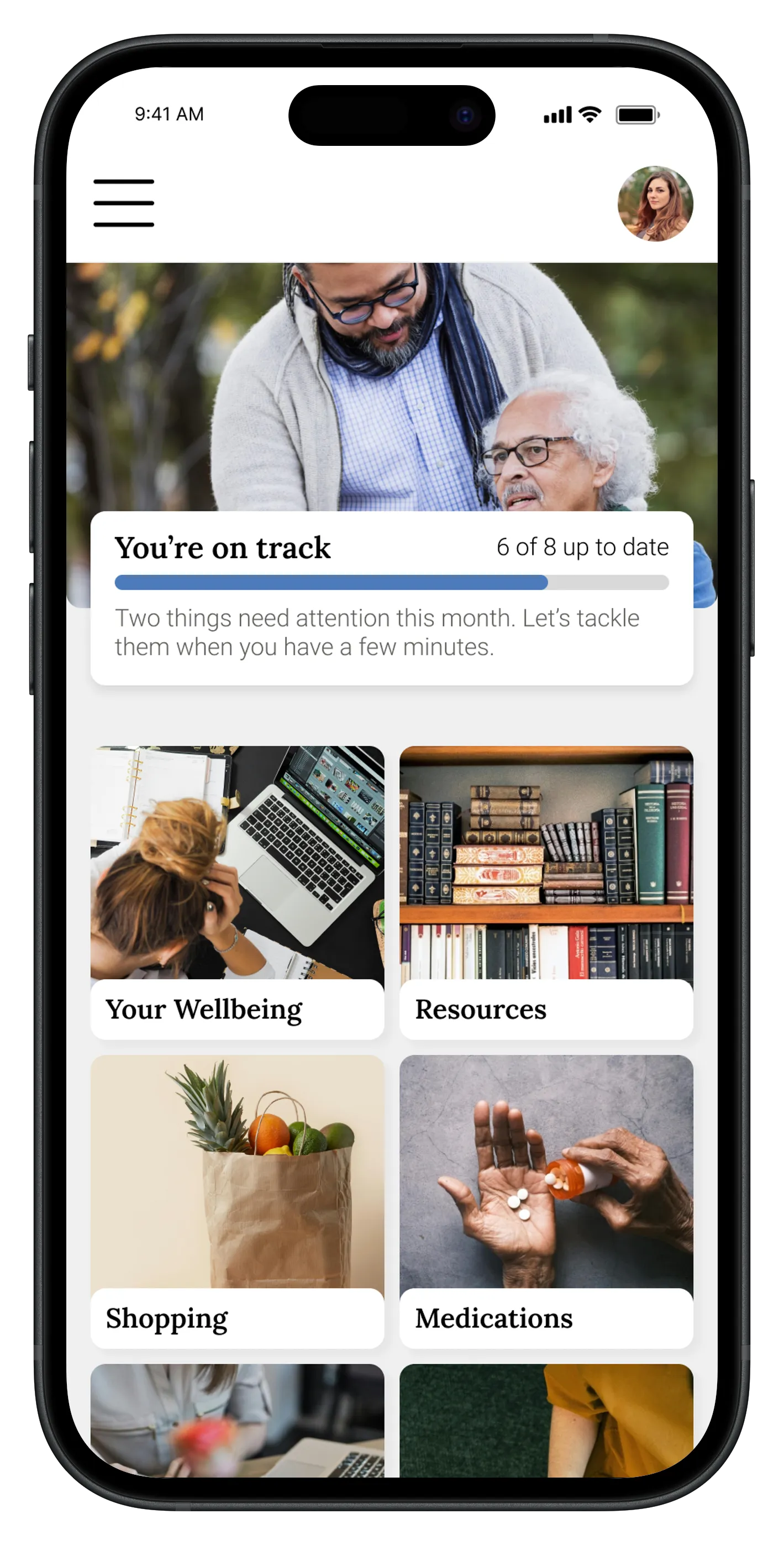
Shopping
Groceries, OTC medications and daily supplies ordered for delivery or pickup, and a major retention driver.
-
Resources
Plain-language guides on the parts of caregiving nobody prepares you for, organized by what you're facing.
-
Surveys
Short questionnaires that route structured caregiver insight back to the plan without a phone call.
Where engagement comes from
The four features used most.
These are the ones caregivers open first, return to, and tell other family members about.
Care plan & care gaps
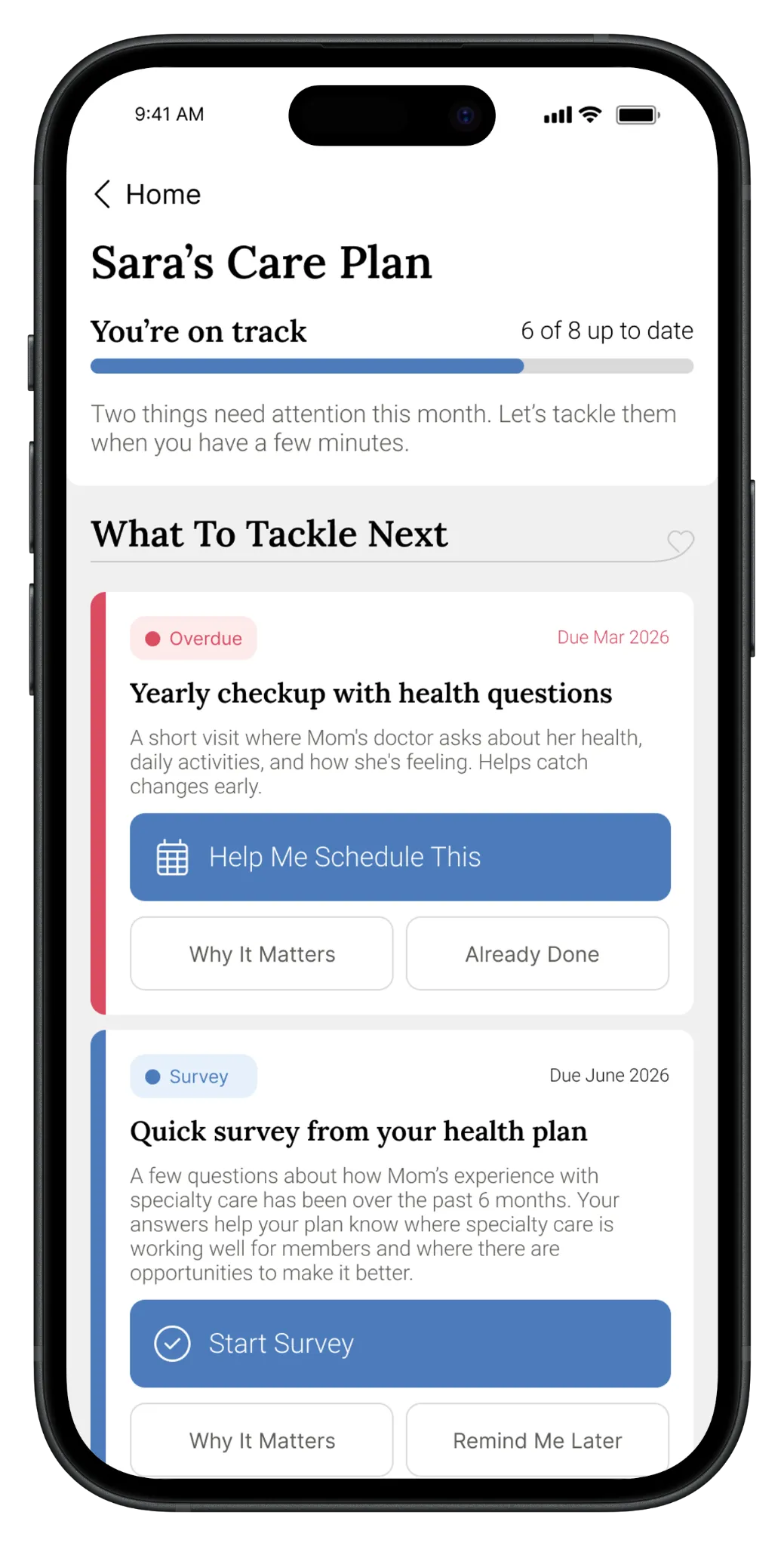
Open gaps arrive from the plan and are rewritten into something a family member will actually act on. An annual wellness visit becomes “a yearly checkup with health questions,” with one button that starts scheduling, one that explains why it matters, and one that marks it already done.
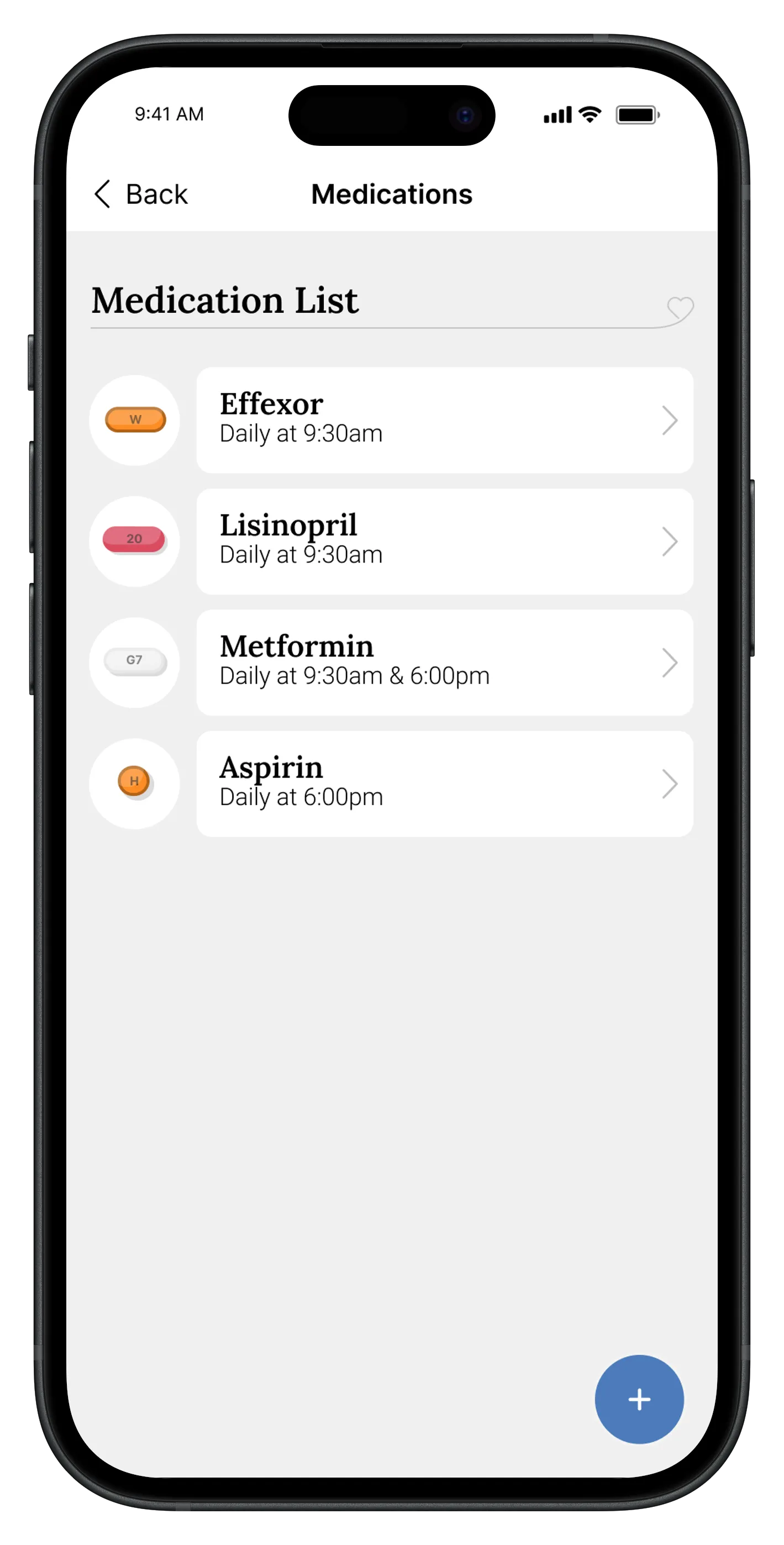
Medications
Keep one list current as prescriptions change, and let dose reminders reach everyone sharing responsibility rather than the one person expected to remember.
Wellbeing
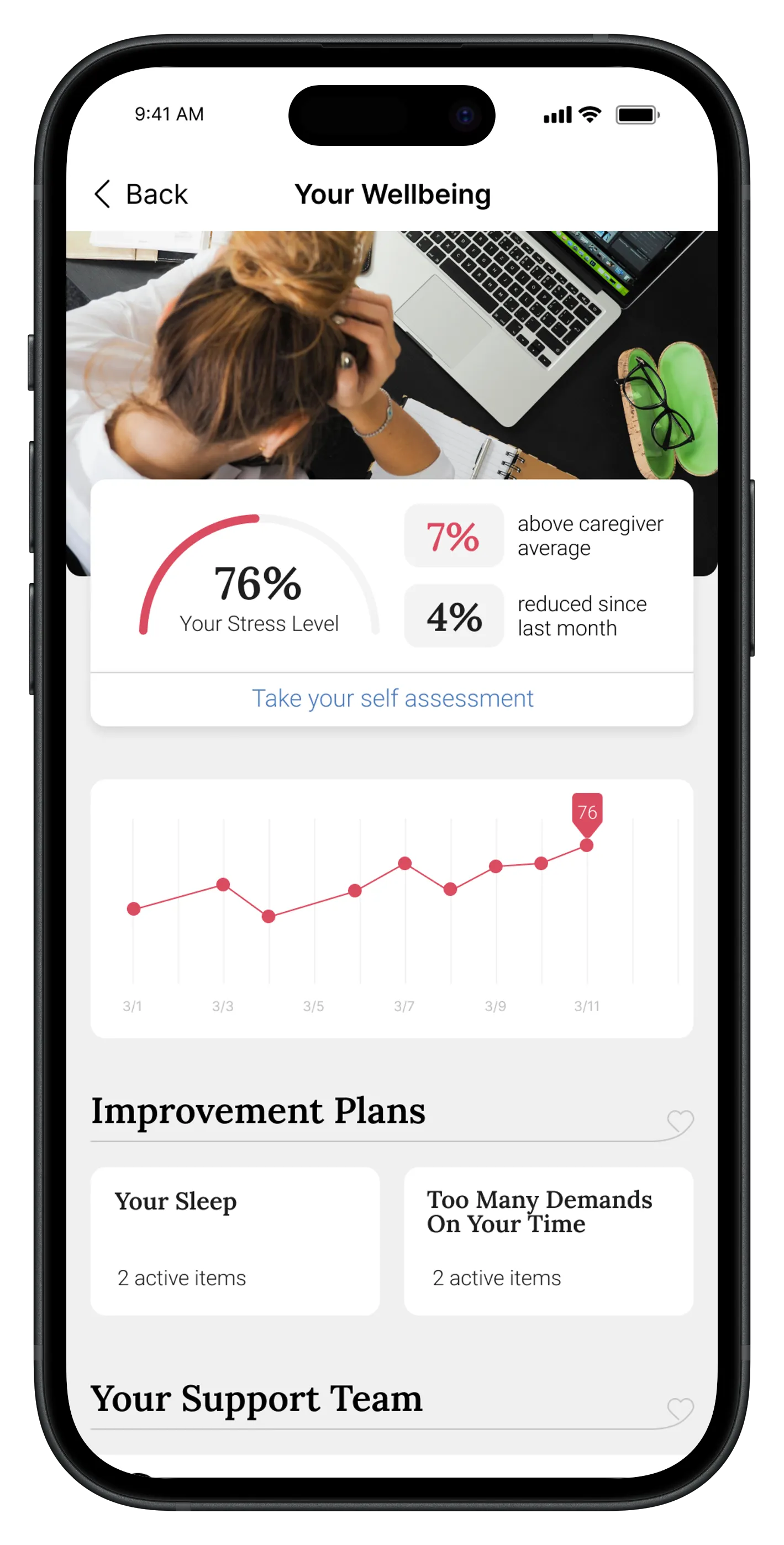
A stress check-in that tracks how the caregiver is doing over time, benchmarks it, and turns the result into small, specific improvement plans, because a caregiver who burns out stops being a channel for anything.
Appointments
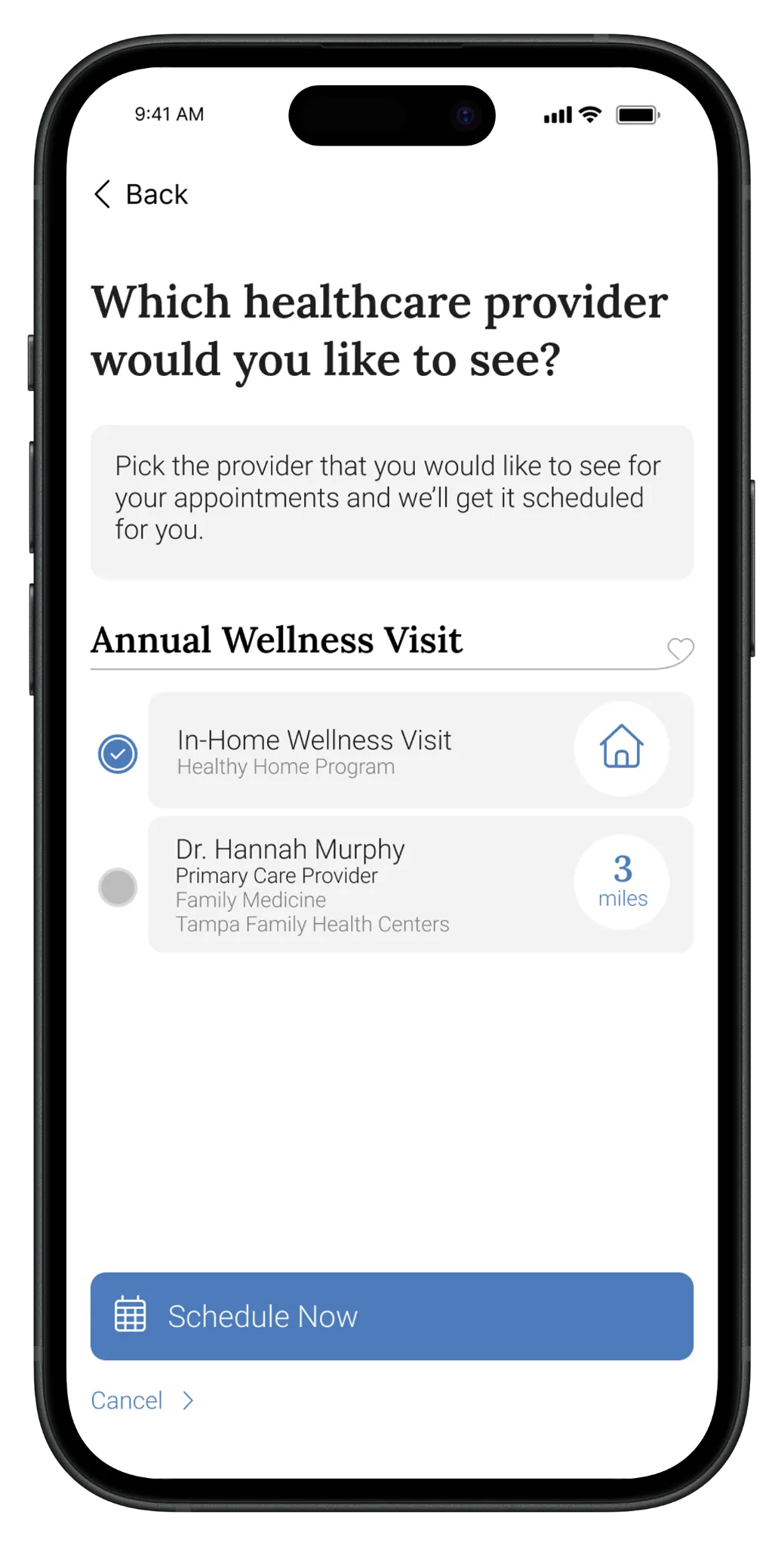
Scheduling is the single thing caregivers most want off their plate, so we made it the easiest action in the app. Choose a provider, including the ones the plan recommends, and we handle getting it booked.
Source: Avanlee Care platform data, 2025.
Built for the plan
Your reminders arrive in an app they already open.
Plan communication puts your reminders and notifications inside the app a caregiver already opened to book a visit or check a medication off. They arrive as part of work that is already underway, rather than as one more piece of outreach to get to later.
- Plan-sourced reminders appear in context, alongside the caregiver's own tasks
- Delivered in plain language, not measure names
- Every reminder carries an action, a reason, and a way to say it's already handled
- Delivery, read and action data flows back to you
From your health plan
Mom is due for a yearly checkup with health questions
It is the visit where her doctor reviews everything at once. Most people are in and out in under an hour.
See the caregiver experience end to end.
A 30-minute walkthrough of the app a caregiver actually uses, and how a care gap moves through it.
Request a demo